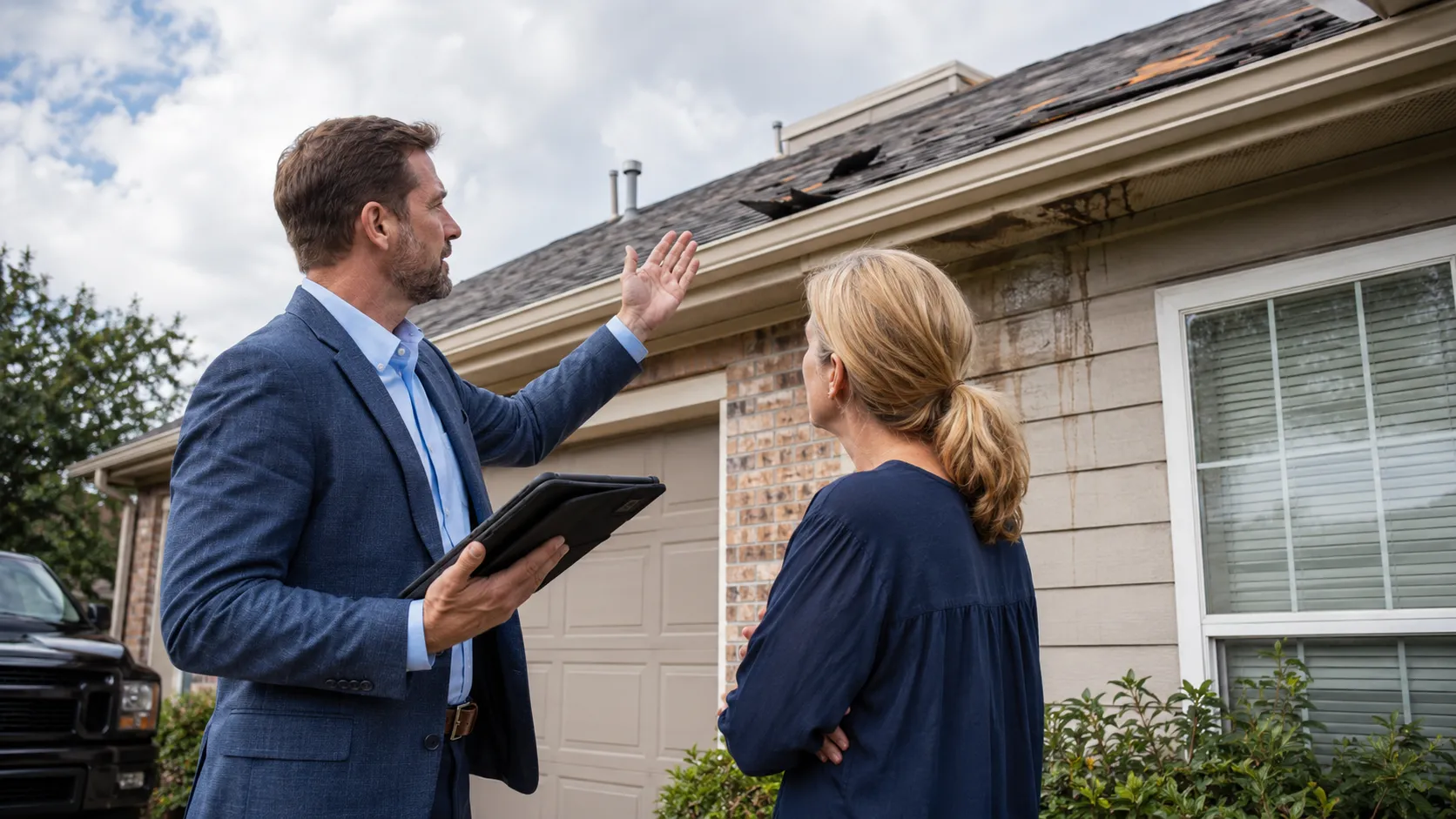
Filing a property insurance claim looks simple at first. Report the damage, take a few photos, receive an estimate, and wait for payment. In reality, the process can become complicated fast, especially when the loss involves fire, hail, water, structural damage, business interruption, or a large inventory of damaged belongings. This is where public adjusters can provide support that most individual policyholders are not equipped to provide for themselves.
That does not mean property owners are incapable of managing their own claims. Many do. However, handling a claim properly requires time, organization, estimating knowledge, policy awareness, documentation skills, and the confidence to challenge an insurer’s conclusions when the facts do not match the initial offer.
That is a demanding job.
A public adjuster approaches the claim as a professional project. The goal is not simply to report damage. The goal is to identify the full scope of the loss, connect that damage to the policy, calculate the cost accurately, document every major item, and present the claim in a format the insurance company can evaluate.
That difference matters.
What Is a Public Adjuster?
A public adjuster is a licensed insurance professional who represents the policyholder during a property insurance claim. Unlike an adjuster assigned by the insurance company, a public adjuster works for the homeowner, business owner, landlord, or other insured party.
There are several types of adjusters involved in insurance claims:
| Type of Adjuster | Who Hires Them? | Whose Interests Do They Represent? |
|---|---|---|
| Company adjuster | Insurance company | Insurance company |
| Independent adjuster | Insurance company | Insurance company |
| Public adjuster | Policyholder | Policyholder |
The distinction is important.
The insurance company’s adjuster investigates the loss on behalf of the insurer. That professional may be fair, experienced, and helpful, but the role is still tied to the insurance company’s claim process.
Public adjusters, by contrast, prepare and negotiate the claim from the policyholder’s perspective. They inspect the loss, review the policy, build estimates, organize evidence, communicate with the insurer, and address disputed items.
They do not create coverage where none exists. They also cannot guarantee a particular result. What they can do is make sure the claim is thoroughly prepared and supported.
Can Individuals Handle Their Own Insurance Claims?
Yes. A policyholder can usually handle a claim without hiring professional representation.
For a minor loss, that may be reasonable. A small area of visible damage with a clear cause, a straightforward repair estimate, and no dispute may not require outside help.
Larger claims are different.
Consider what a policyholder may need to do after a serious property loss:
- Read and understand the insurance policy
- Identify covered and excluded damage
- Photograph every affected area
- Protect the property from additional damage
- Meet reporting and documentation deadlines
- Create a detailed repair scope
- Gather contractor estimates
- Inventory damaged belongings
- Research replacement costs
- Communicate with multiple adjusters
- Answer insurer requests
- Review depreciation
- Track temporary expenses
- Challenge missing or underpriced repair items
That is a lot to manage while dealing with a damaged home or disrupted business.
The main difference is not always legal authority. It is professional capability. Public adjusters routinely perform claim tasks that most individuals rarely encounter.
Public Adjusters Interpret Complex Policy Language
Insurance policies are contracts. They contain definitions, conditions, exclusions, endorsements, deductibles, duties after loss, and limitations that affect how a claim is handled.
Reading the declarations page is not enough.
A policyholder may see a coverage limit and assume that amount is automatically available. In practice, payment may depend on the cause of loss, the type of property damaged, the valuation method, the deductible, and whether certain conditions are satisfied.
A public adjuster may review issues such as:
- Replacement cost versus actual cash value
- Wind or hail deductibles
- Water damage limitations
- Ordinance or law coverage
- Debris removal
- Additional living expenses
- Business income coverage
- Matching issues
- Personal property limits
- Proof-of-loss requirements
This does not mean public adjusters act as attorneys. They should not provide legal advice unless separately licensed to practice law. However, they can apply policy provisions to the practical preparation of a claim.
That can prevent valuable coverage from being overlooked.
They Conduct Claim-Focused Damage Inspections
Most property owners inspect damage by looking for what is obvious.
A roof is missing shingles. A ceiling has a stain. A wall is wet. Smoke residue is visible. Flooring is warped.
A professional claim inspection goes deeper.
Public adjusters look at how the loss affected the entire property, not just the most noticeable surface. They may inspect connected rooms, building systems, exterior components, mechanical equipment, personal property, and areas where damage may have traveled.
For example, after a roof leak, the visible ceiling stain may be only one part of the loss. Water may have affected:
- Insulation
- Drywall
- Framing
- Electrical fixtures
- Flooring
- Cabinets
- Paint
- Personal belongings
A quick inspection might capture the stain. A complete inspection follows the path of the water.
That is a major difference.
They Identify Damage Individuals May Miss
Hidden damage is one of the most common reasons claims are underestimated.
Homeowners often document what they can see. Insurers may also prepare an early estimate before every consequence of the loss becomes apparent.
Public adjusters are trained to look for secondary effects.
After a fire, for instance, the damage may extend far beyond the burned area. Smoke particles can spread through air-conditioning systems, settle inside cabinets, affect electronics, and contaminate porous materials.
After hail, the roof may not be the only concern. Damage may also affect gutters, window screens, exterior paint, vents, fencing, siding, soft metals, and rooftop equipment.
After a plumbing failure, water can move behind walls and under flooring before appearing in another room.
The key is to inspect the property as a connected system.
That is difficult for an individual who has never handled a major claim before.
They Prepare a Complete Scope of Loss
An estimate is only as accurate as the repair scope behind it.
The scope of loss describes what needs to be cleaned, removed, repaired, replaced, accessed, tested, or restored. If an item is missing from the scope, it will probably be missing from the estimate.
A strong scope may include:
- Emergency services
- Water extraction
- Demolition
- Debris removal
- Drying equipment
- Cleaning
- Labor
- Materials
- Permits
- Access costs
- Equipment rental
- Protection of undamaged areas
- Disposal fees
- Code-required upgrades
- Finish work
Individuals often focus on the main damaged item. A public adjuster considers the full sequence of work.
Take damaged flooring as an example. Replacing the floor may require moving furniture, removing baseboards, detaching fixtures, disposing of damaged material, preparing the subfloor, installing new flooring, reinstalling trim, painting affected surfaces, and cleaning the space.
The flooring price alone does not tell the whole story.
Public Adjusters Prepare Detailed Repair Estimates
Contractor estimates can be useful, but they vary widely in format and detail. Some provide one total price with very little explanation. Others include enough information to understand labor, materials, quantities, and repair methods.
Insurance estimates are often highly itemized.
To compare the two effectively, someone must understand measurements, pricing, line items, waste factors, labor, material grades, and repair sequencing.
Public adjusters may prepare or review detailed estimates using industry-standard estimating methods. They can compare their findings against the insurer’s scope and identify differences such as:
- Missing rooms
- Incorrect dimensions
- Low material allowances
- Omitted labor
- Missing access costs
- Insufficient waste factors
- Incorrect depreciation
- Incomplete painting
- Excluded cleanup
- Missing permit costs
This process is not about inflating a claim. It is about finding legitimate repair costs that were left out or valued inaccurately.
Numbers need support.
A professional estimate provides it.
They Document Personal Property Losses
Contents claims are exhausting.
Imagine standing in a damaged kitchen, bedroom, office, or warehouse and trying to list every item inside. You must identify the item, describe it, estimate its age, determine its condition, find a comparable replacement, and provide a price.
Now repeat that hundreds of times.
Public adjusters may help organize contents inventories and supporting evidence, including:
- Item descriptions
- Brand names
- Model numbers
- Purchase dates
- Quantities
- Photographs
- Receipts
- Replacement links
- Estimated replacement costs
- Depreciation disputes
This is especially valuable after fires, floods, and major water losses.
Individuals often underestimate the value of ordinary belongings because they think about each item separately. A few shirts, kitchen tools, books, decorations, electronics, linens, and pieces of furniture may not seem significant alone.
Together, they can represent a substantial loss.
They Analyze Additional Living Expenses
When a home becomes uninhabitable, the property damage is only part of the problem.
Families may need temporary housing, additional transportation, restaurant meals, laundry services, pet boarding, storage, and other necessities.
These expenses may fall under additional living expense coverage, depending on the policy and circumstances.
The challenge is documentation.
Public adjusters can help policyholders track expenses and distinguish between normal household spending and increased costs caused by the loss.
For example, a family normally spends $700 per month on groceries but spends $1,200 on meals while living in a hotel. The claim may involve the increase, not automatically the entire $1,200.
Receipts matter. So does organization.
Without a clear tracking system, valid expenses can be forgotten.
They Help Document Business Interruption Claims
Commercial property claims can be far more complicated than residential claims because physical damage may also interrupt revenue.
A business may lose access to its location, equipment, inventory, customers, or normal operating capacity.
Business interruption claims may require review of:
- Historical revenue
- Seasonal trends
- Payroll
- Fixed expenses
- Projected income
- Temporary operating costs
- Lost contracts
- Reduced production
- Extra expenses
- Recovery timelines
This often requires coordination with accountants, bookkeepers, contractors, and other specialists.
A public adjuster does not replace a certified public accountant when advanced financial analysis is needed. However, the adjuster can help organize the property and operational facts that support the claim.
For a business owner already trying to keep the company alive, that support can be critical.
They Build an Organized Claim Package
A stack of receipts is not a claim presentation.
Neither is a folder of unlabeled photographs.
Insurance companies need information that can be reviewed, matched, verified, and compared. Public adjusters organize the documentation into a coherent package.
That may include:
- A damage summary
- A room-by-room scope
- Photographs with labels
- Repair estimates
- Contractor proposals
- Personal property inventories
- Invoices
- Receipts
- Expert reports
- Temporary expense records
- Claim correspondence
- Supporting policy provisions
The evidence should tell a clear story.
What happened? What was damaged? What work is required? What does the work cost? Which documents support those costs?
When the answers are scattered, the claim can stall. When they are organized, disagreements become easier to identify.
They Communicate With the Insurance Company
Insurance claims involve repeated communication.
There may be phone calls, emails, inspections, requests for documents, revised estimates, follow-up questions, repair updates, and payment discussions.
Miss one request, and the claim may slow down.
Respond too quickly without reviewing the information, and the policyholder may provide an incomplete or inaccurate answer.
Public adjusters often act as the primary claim contact. They can schedule inspections, submit documents, respond to questions, track unresolved issues, and maintain a record of the claim’s progress.
This removes a major burden from the policyholder.
It also helps keep communication consistent.
They Negotiate Specific Claim Differences
Negotiation is not simply asking for more money.
Effective claim negotiation requires identifying the exact point of disagreement and presenting evidence that supports a different conclusion.
For example:
| Disputed Issue | Evidence That May Support the Claim |
|---|---|
| Missing roof components | Photos, measurements, contractor scope |
| Low material allowance | Supplier pricing, comparable products |
| Excessive depreciation | Age, condition, maintenance records |
| Incomplete water scope | Moisture readings, drying logs, photos |
| Missing code upgrades | Local requirements, permit information |
| Insufficient cleaning | Restoration reports, contamination findings |
Public adjusters can explain why an item belongs in the estimate, how the quantity was calculated, and what documentation supports the requested amount.
That is more persuasive than saying, “The offer feels too low.”
Specificity wins.
They Track Claim Deadlines and Requirements
Insurance policies include duties after a loss. State rules and policy terms may also create important timelines.
Depending on the claim, the policyholder may need to:
- Report the loss promptly
- Protect the property
- Preserve damaged items
- Submit records
- Attend an examination
- Prepare an inventory
- File a proof of loss
- Complete repairs
- Submit replacement cost documentation
Deadlines can be easy to miss, especially when repairs take months.
Public adjusters help monitor claim requirements and remind policyholders what information still needs to be provided.
They cannot erase missed deadlines or override policy terms. However, structured claim management reduces avoidable mistakes.
They Coordinate With Other Professionals
Large property claims rarely involve only one person.
A claim may require input from:
- Roofing contractors
- General contractors
- Engineers
- Plumbers
- Electricians
- Restoration companies
- Industrial hygienists
- Accountants
- Inventory specialists
- Attorneys
Public adjusters can help coordinate these professionals and make sure their findings address the claim’s disputed issues.
For instance, an engineer may explain the cause of structural movement, while a contractor calculates the repair cost. A restoration company may document contamination, while an inventory specialist values damaged contents.
The public adjuster helps connect those pieces.
What Public Adjusters Cannot Do
Public adjusters have an important role, but there are clear limits.
They cannot:
- Guarantee a settlement amount
- Change the insurance policy
- Create coverage for excluded damage
- Misrepresent the cause of loss
- Provide unsupported estimates
- Practice law without a law license
- Perform engineering without proper qualifications
- Force the insurer to accept every demand
- Replace the policyholder’s duty to be truthful
Be cautious around anyone who promises a guaranteed outcome.
Professional claim representation should be based on evidence, not hype.
When Hiring a Public Adjuster Makes Sense
Not every claim requires one.
However, professional help may be worth considering when:
- The damage is extensive
- Several rooms or systems are involved
- The claim includes fire or smoke damage
- The insurer’s estimate appears incomplete
- The claim has been delayed
- Important items were denied
- The property is commercial
- The contents inventory is large
- Temporary expenses are accumulating
- The policyholder lacks time to manage the claim
The size of the claim matters, but complexity matters just as much.
A smaller claim with serious coverage or documentation issues may be harder to manage than a larger but straightforward loss.
When You May Not Need One
A public adjuster may not be necessary when the damage is minor, the repair scope is clear, and the insurer responds with a complete and reasonable estimate.
Before hiring anyone, compare the potential benefit with the fee.
Ask:
- What work will the adjuster perform?
- Who will handle the claim?
- How is the fee calculated?
- Is the fee based on the full settlement or additional recovery?
- Can the agreement be canceled?
- Are there extra charges?
- How often will updates be provided?
Read the contract closely.
Do not sign under pressure.
How to Choose the Right Public Adjuster
Start with licensing.
Then look deeper.
Choose a professional who can explain the claim process without making exaggerated promises. Ask about experience with similar losses, estimating methods, communication practices, and who will personally inspect the property.
Strong candidates should be able to explain:
- How the inspection will work
- What documents they need
- How they prepare estimates
- How they communicate with the insurer
- How often they provide updates
- What happens when a dispute involves legal issues
Experience is valuable. Transparency is just as important.
Public Adjusters Versus Handling the Claim Yourself
| Claim Responsibility | Handling It Yourself | Hiring a Public Adjuster |
|---|---|---|
| Policy review | You interpret the policy | Adjuster reviews claim-related provisions |
| Damage inspection | You identify visible damage | Adjuster performs a detailed inspection |
| Repair scope | You rely on personal knowledge or contractors | Adjuster builds a claim-focused scope |
| Estimate review | You compare totals | Adjuster compares line items and quantities |
| Contents inventory | You list and price belongings | Adjuster helps structure and support the inventory |
| Communication | You handle calls and emails | Adjuster manages claim communication |
| Negotiation | You dispute the offer directly | Adjuster presents documented differences |
| Deadline tracking | You monitor all requirements | Adjuster helps manage claim tasks and deadlines |
How a Missouri City Public Adjuster Can Help
Property owners in Missouri City may face claims involving hail, wind, heavy rain, plumbing failures, roof leaks, fires, smoke, and commercial property damage.
Local construction conditions matter. So do regional labor rates, roofing materials, permitting requirements, and repair availability.
A Missouri City public adjuster can inspect the property, organize the loss, compare estimates, document missing items, and communicate with the insurance company on the policyholder’s behalf.
For homeowners and business owners, the most valuable benefit may be clarity.
You gain a clearer understanding of what was damaged, what the policy may cover, what documentation is missing, and why the insurer’s estimate differs from the actual repair needs.
Frequently Asked Questions
Can public adjusters negotiate with insurance companies?
Yes. Licensed public adjusters can prepare and negotiate property insurance claims for policyholders, subject to applicable state laws and licensing requirements.
Do public adjusters work for the insurance company?
No. Public adjusters represent the policyholder. Company adjusters and independent adjusters hired by insurers represent the insurance company.
Can a public adjuster help after an initial estimate?
Yes. A policyholder may hire an adjuster after receiving the insurer’s estimate, especially when the scope appears incomplete or the claim is underpaid.
Can public adjusters reopen closed claims?
Sometimes. The ability to reopen or supplement a claim depends on policy terms, deadlines, prior payments, releases, and the facts of the loss.
Can a public adjuster overturn a denial?
A public adjuster may provide additional documentation or challenge factual claim issues. Legal disputes over coverage may require an insurance attorney.
Do public adjusters guarantee larger settlements?
No reputable adjuster should guarantee a specific result. Claim outcomes depend on the policy, evidence, damage, deadlines, and insurer review.
Are public adjusters useful for contents claims?
Yes. They can help organize, describe, price, and document damaged personal or business property.
Do public adjusters perform repairs?
Generally, no. Their role is to handle the insurance claim. Repairs are performed by contractors and other qualified professionals.
How are public adjusters paid?
Many charge a percentage of the claim settlement, although fee structures vary. Review the contract and applicable rules before hiring.
What documents should I prepare?
Gather your insurance policy, claim number, insurer estimates, photographs, contractor proposals, receipts, invoices, repair records, and all claim correspondence.
Conclusion
Individuals can handle their own insurance claims. The question is whether they have the time, experience, estimating knowledge, documentation systems, and negotiating ability to handle the claim thoroughly.
Public adjusters bring a structured process to a stressful situation. They inspect the damage, interpret claim-related policy terms, prepare scopes, review estimates, document personal property, organize expenses, communicate with the insurer, and negotiate specific disputed items.
They do not perform magic. They do the work.
For a small and straightforward loss, professional representation may not be necessary. For a large, complicated, delayed, denied, or underpaid claim, the difference can be substantial.
Missouri City property owners who are uncertain about the scope or value of a loss should review the claim carefully before accepting a final settlement. A detailed claim evaluation may reveal missing damage, incomplete repair costs, or documentation that still needs to be submitted.
Rise Public Adjusting LLC, License #3356839, assists homeowners and business owners with property insurance claims. Contact Missouri City Public Adjuster at +1 (832) 503-5866 or info@missouricitypublicadjuster.com to discuss your claim and determine whether professional representation is appropriate.